
Why Dirty Air Ducts Make Allergy Season Worse
Allergy season in Central Florida does not follow the same calendar as the rest of the country, and the stretch from late summer into fall brings a heavy wave of ragweed, grass pollen, and mold spores that keeps sinuses working overtime. Most homeowners blame the outdoors for that misery, yet a large share of what people breathe every day has been circulating inside the house for months. Your duct system moves the entire volume of air in your home several times an hour, so anything sitting inside that ductwork gets a free ride into every bedroom, hallway, and living room. Dust, pet dander, leftover construction debris, and mold spores settle on duct walls and break loose whenever the blower kicks on. Sanford homes deal with humidity levels that make the problem worse, since damp duct surfaces give mold a place to grow instead of simply collecting dry dust. The result is a house that feels stuffy, smells musty, and triggers symptoms even with every window shut tight. Understanding how dirty air ducts feed allergy season gives you a clear path to fixing the problem at the source rather than treating the same symptoms year after year.
How Dirty Air Ducts Make Allergy Season Worse Inside Your Home
A duct system is a closed loop, and that loop only stays clean when every part of it stays sealed and dry. Return ducts pull air out of your living space, push it across the filter and the evaporator coil, then send it back out through the supply registers in each room. Anything that slips past the filter settles inside the sheet metal and flex duct where no household vacuum will ever reach. Over several years that layer of debris turns into a reservoir holding the exact particles that set off allergy symptoms. Each time the system cycles on, air moving at high velocity scrubs the duct walls and lifts a portion of that material back into the airstream. You end up breathing last year’s pollen right in the middle of this year’s pollen season, which is why so many people feel worse indoors than they do outside.
What Builds Up Inside Dirty Air Ducts Over Time
The material inside a neglected duct system is far more varied than most homeowners expect, and it accumulates in layers much like sediment in a riverbed. Skin cells and textile fibers make up the bulk of ordinary household dust, and those particles carry the proteins that dust mites feed on and leave behind. Pollen tracked in on shoes, clothing, and pet fur gets pulled into the return grille and deposited along the interior duct walls where airflow slows down. Pet dander is light enough to stay suspended for hours, so it travels the full length of the duct run before it settles into corners and elbows. Insulation fibers from an aging attic, drywall dust from a past remodel, and soot from candles or cooking all join the mix. In older Sanford homes with duct systems that have been in place for two decades or more, that accumulation can measure a visible fraction of an inch across the bottom of every trunk line. None of it decomposes or disappears on its own, because ductwork offers no sunlight, no rain, and no cleaning cycle of any kind.
Filter bypass is the single biggest reason debris ends up where it does not belong, and it happens in almost every system that has never been properly evaluated. A filter only cleans the air that actually passes through the media, so any gap around the frame becomes an open door for unfiltered air carrying everything the filter was installed to catch. Filter slots cut oversize during installation, missing gaskets, warped filter frames, and doors that no longer seal all create that gap. Homeowners also contribute to the problem by choosing filters based on price alone, since the thin fiberglass panels sold at most hardware stores are designed to protect equipment from large debris rather than to capture the fine particles that trigger allergy symptoms. A pleated filter rated between MERV 8 and MERV 13 captures a far higher percentage of pollen, mold spores, and dander, though the choice needs to match what your blower can handle without starving the system for airflow. Running a filter past its service life makes matters worse, because a loaded filter increases pressure drop and encourages air to find every leak path around the media. The fix is rarely complicated, but it does require someone to actually look at how the filter seats rather than assuming the rack was built correctly in the first place.
Remodeling projects and new construction leave behind the heaviest contamination a duct system will ever see, and that debris lingers for the life of the ductwork. Drywall sanding produces gypsum dust fine enough to hang in the air for hours, and it settles anywhere air moves slowly. Sawdust, joint compound, insulation scraps, and even fast food wrappers routinely turn up inside supply trunks during cleaning work on homes that were built or renovated without the ducts being sealed off. Running the air conditioning system during active construction pulls all of that material straight into the return and distributes it through the house. Pests create a second category of contamination, since rodents and insects that find their way into attic ductwork leave droppings, nesting material, and shed skin behind them. Those contaminants carry allergens and bacteria that no filter can remove once they are already downstream of the air handler. The United States Environmental Protection Agency specifically recommends duct cleaning when there is visible mold growth, evidence of vermin, or enough debris that particles are actively being released into the living space. Need your ductwork inspected before ragweed season peaks? Click here for our air duct services.
How Dirty Air Ducts Spread Allergens Through Every Room
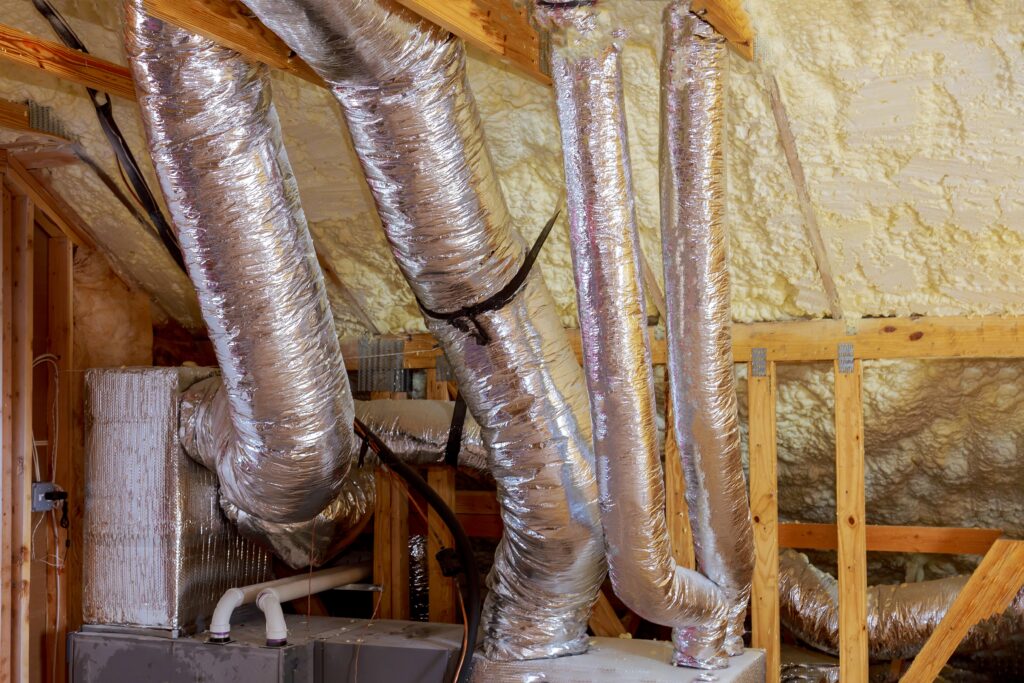
Distribution is what separates a dusty attic from a dirty duct system, because ductwork is engineered to deliver air everywhere people spend time. A residential blower typically moves somewhere between 800 and 2,000 cubic feet of air per minute depending on system size, and that air travels through the ducts at velocities high enough to keep small particles airborne. Allergens in the respirable range, meaning particles roughly ten microns and smaller, stay suspended long enough to reach the far end of any duct run before gravity has a chance to pull them down. Pollen grains, mold spores, and dander all fall within or near that range, so they behave less like dust settling on a shelf and more like smoke drifting through a room. Every start and stop of the blower creates a pressure surge that shakes loose material clinging to the duct interior. That is why so many people notice a puff of dust from the supply registers in the first seconds after the system cycles on. The ductwork is not just storing allergens; it is broadcasting them on a schedule set by your thermostat.
Pressure imbalance inside the house compounds the problem in ways most homeowners never consider. Many homes are built with a single central return and no dedicated return path from the bedrooms, so closing a bedroom door pressurizes that room while the rest of the house goes slightly negative. The pressurized room pushes conditioned air out through wall cavities and ceiling penetrations, and the negative side of the house pulls replacement air in from the attic, the garage, and the crawl space. That replacement air carries attic dust, insulation fibers, fiberglass particles, and whatever mold is growing on damp framing. Undercut doors, transfer grilles, and jumper ducts exist to relieve that imbalance, yet they are missing or undersized in a large number of homes across Seminole and Volusia counties. A duct system that is already carrying a heavy load of debris and also operating under a serious pressure imbalance will make allergy symptoms noticeably worse. Correcting the return path often produces a bigger improvement in comfort and air quality than any single filter upgrade.
The bedroom is where distributed allergens do the most damage, simply because that is where people spend the longest uninterrupted stretch of time breathing indoor air. Particles delivered through the supply register drift down and settle into bedding, carpet fibers, upholstered headboards, and curtains. Dust mites thrive in that environment when indoor relative humidity climbs above roughly fifty percent, which happens easily in Florida homes where the air conditioning system is oversized and short cycles without removing enough moisture. The mites feed on the skin cells already present, multiply, and leave behind fecal proteins that rank among the most common indoor allergy triggers in the country. Every time someone rolls over, sits down, or fluffs a pillow, those particles go back into the air at breathing level. Morning congestion, scratchy eyes on waking, and coughing that eases within an hour of leaving the house all point toward an indoor source rather than an outdoor one. Cleaning the ducts alone will not eliminate dust mites, though reducing the supply of allergens being delivered into the room and controlling indoor humidity together make a real difference.
Warning Signs of Dirty Air Ducts During Allergy Season
Visual evidence at the registers is usually the first clue, and it is easy to check without any tools. Pull a supply register cover in a hallway or bedroom and look at the first foot of duct behind it, along with the underside of the register blades. Gray fuzz clinging to the blades, a visible film on the boot, or dark streaking radiating outward across the ceiling paint around the register all indicate that particulate is moving through and depositing as it exits. That streaking pattern happens when air carrying fine particles washes across a surface, and it shows up most often around supply registers and return grilles in homes with heavy candle use, cooking smoke, or long neglected filters. Check the return grille as well, since a heavy mat of lint on the room side of the grille tells you the filter behind it is either loaded or bypassing. Look for dust that reappears within a day or two of cleaning hard surfaces, which suggests a continuous supply rather than a one time event. None of these signs proves the duct interior is contaminated, but together they justify a closer look by a technician with a camera and proper lighting.
Odor gives you the second and often more urgent set of clues, and the timing of the smell matters. A musty or earthy smell that appears in the first thirty seconds after the blower starts and then fades points toward moisture and biological growth somewhere in the air path, most often the evaporator coil, the drain pan, or the supply plenum. A sour or dirty sock odor that shows up when the system switches on has a similar cause and comes from a biofilm developing on a coil that stays wet between cycles. Smells that persist regardless of system operation are more likely coming from the room itself, so paying attention to that difference helps narrow down the source quickly. Mold growing on porous duct liner or on fiberglass duct board cannot be wiped away the way it can on sheet metal, and those materials sometimes need replacement rather than cleaning. Any visible growth around a register boot, on the ceiling near a supply, or inside the air handler cabinet deserves professional evaluation right away. Ignoring a musty odor through an entire Florida summer allows a small moisture problem to become a full duct replacement.
Symptom patterns tell you more than most people realize, and they are worth tracking for a week or two. Congestion, sneezing, or itchy eyes that improve within a few hours of leaving the house and return shortly after coming home suggest an indoor trigger. Symptoms that spike when the air conditioning system runs hard, such as during the hottest part of the afternoon or immediately after a long off cycle, point toward the duct system as the delivery mechanism. Filters that look filthy after four weeks when they used to last three months indicate either a rising particle load or a system pulling unfiltered air from somewhere it should not. Family members who sleep in rooms at the end of long duct runs sometimes report worse symptoms than everyone else, which reflects how much material accumulates in those runs. Pets, new flooring, recent construction next door, and a roof replacement all raise the odds that something is loading up your ductwork. Writing down when symptoms hit and what the system was doing at the time gives your technician far better information to work with.
Florida Humidity, Mold Growth, and Dirty Air Duct Problems
Central Florida presents a specific challenge that homeowners in drier climates never face, and it changes the entire conversation about duct cleanliness. Outdoor dew points here sit in the low to mid seventies for months at a time, which means the air surrounding your attic ductwork is loaded with moisture looking for a cold surface. Supply ducts carry air at roughly fifty five degrees, and any spot where insulation has compressed, torn, or slipped off becomes a condensation point. Wet insulation and damp duct liner give mold everything it needs, since the dust already inside the duct provides the food source. That combination turns an ordinary dust problem into a biological one that actively produces spores and pushes them into your living space. Sealing, insulating, and dehumidifying matter as much as cleaning in this climate, and skipping any one of them leaves the underlying condition in place.
Why Florida Humidity Turns Air Ducts Into a Mold Problem
Mold requires three things to grow, and Florida attics supply two of them around the clock. Moisture is the limiting factor everywhere else in the country, but here the attic air routinely exceeds seventy percent relative humidity during the wet season while temperatures climb well past a hundred and twenty degrees. Organic material provides the food, and the dust already resting inside the ductwork qualifies perfectly, along with the paper facing on some older duct products and the adhesive layers in flex duct construction. The moment a duct surface drops below the dew point of the surrounding air, condensation forms and growth begins within a day or two. Flex duct with a torn outer vapor barrier is especially vulnerable, since the insulation between the inner liner and the jacket absorbs water like a sponge and stays wet indefinitely. Fiberglass duct board panels used as plenums in many homes built during the eighties and nineties present the same risk, because the exposed interior fiberglass holds moisture and cannot be scrubbed clean without damaging the material. Once growth becomes established on porous material, replacement is usually the honest recommendation rather than cleaning.
The air handler itself deserves as much attention as the duct runs, since it is the wettest point in the entire system. Your evaporator coil pulls gallons of water out of the air on a humid day, and that water drains into a pan and out through a condensate line. Biological growth in the drain pan, a slimy film on the coil fins, or a clogged condensate line that backs water into the cabinet all create ideal conditions for mold within a few feet of the supply plenum. Air passing across a contaminated coil picks up spores and odor and carries both directly into the ducts. A coil that stays soaking wet between cycles because the system short cycles never gets a chance to dry, and that constant saturation accelerates growth. Cleaning the ducts while leaving a fouled coil and a dirty blower wheel in place solves very little, since the source keeps producing. Any thorough approach starts at the air handler and works outward through the distribution system.
Oversized equipment quietly drives a large share of Florida humidity complaints, and it is one of the most common issues found in existing homes. An air conditioning system that is too large for the load satisfies the thermostat quickly, shuts off, and never runs long enough to pull meaningful moisture out of the air. The house feels cold and clammy at the same time, and indoor relative humidity settles somewhere in the high fifties or low sixties instead of the target range near fifty percent. That elevated indoor humidity feeds dust mites, supports mold growth on interior surfaces, and keeps duct exteriors closer to their dew point. Variable capacity equipment addresses this directly by running longer at lower output, which improves both dehumidification and temperature consistency across the house. A properly performed load calculation is the only reliable way to know what size your home actually needs, and rules of thumb based on square footage alone frequently miss by a full ton or more. Correcting equipment sizing during a replacement often resolves humidity and comfort complaints that no amount of duct cleaning would have fixed. Dealing with a system that runs constantly and still leaves the house humid? Click here for our air conditioning services.
How Leaky Air Ducts Pull Attic Air Into Your Living Space
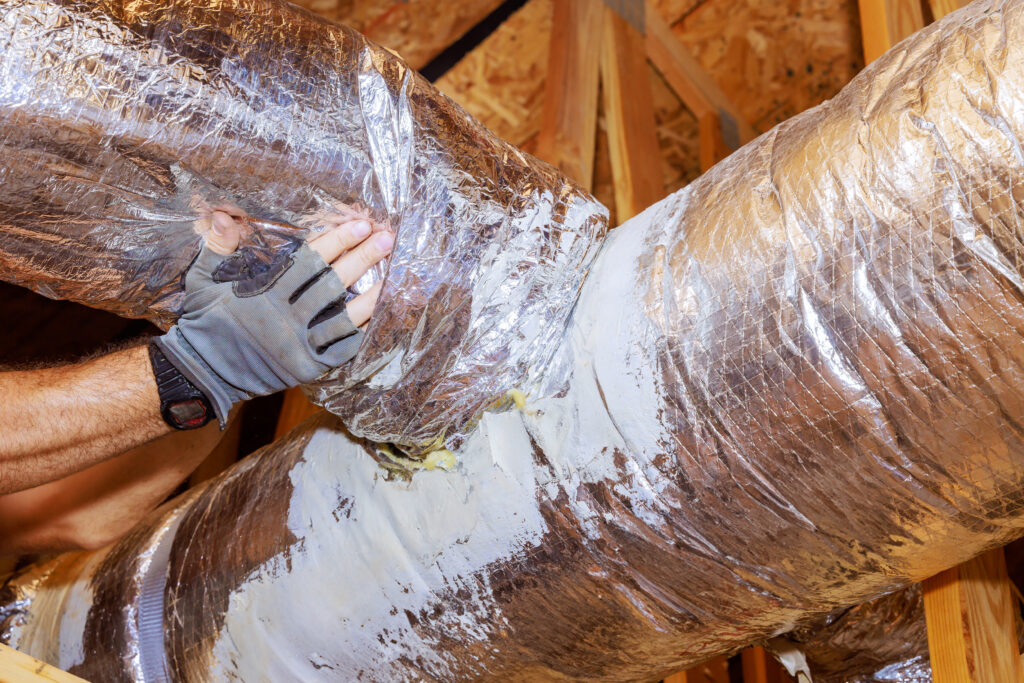
Return duct leakage is the most damaging form of duct leakage in a Florida home, and it is also the most common. The return side of the system operates under negative pressure, so every crack, gap, and failed connection acts like a straw pulling in whatever surrounds the duct. In a typical home the return ducts run through an attic that reaches a hundred and thirty degrees on an August afternoon and holds blown insulation, dust, rodent debris, and moisture laden air. Pulling that air into the system loads the filter faster, fouls the coil, drives up the moisture load the equipment has to remove, and delivers attic contaminants straight into the bedrooms. Duct leakage in existing homes commonly measures somewhere between twenty and thirty percent of total system airflow, which represents a substantial volume of unconditioned air entering the system every hour. Testing with a duct pressurization fan quantifies the leakage instead of leaving it to guesswork. Homeowners who address return leakage often report an immediate drop in dust accumulation throughout the house.
Supply leakage causes a different set of problems and costs real money every month. Air escaping a supply duct in the attic never reaches the room it was intended for, so that room stays warm while the equipment runs longer trying to satisfy the thermostat. Losing supply air into the attic also depressurizes the house slightly, which pulls replacement air in through the building envelope from the garage, the soffits, and around window frames. That infiltrating air brings outdoor pollen and humidity directly indoors during the worst part of allergy season. Common leak points include the connection between the flex duct inner liner and the register boot, the seams of the supply plenum, disconnected takeoffs, and joints held together with cloth backed duct tape that dried out and released years ago. Proper sealing uses mastic applied over mechanical fasteners rather than tape alone, since mastic remains flexible and bonds permanently. Insulating the repaired connection and restoring the vapor barrier finishes the job and prevents condensation at the same spot.
Duct systems also fail in less obvious mechanical ways that hurt airflow and comfort together. Flex duct that was installed with excessive length gets coiled or draped across attic framing, and every sag and sharp bend adds resistance that reduces the air reaching that room. Compressed sections crushed under stored boxes or squeezed between trusses restrict airflow badly, sometimes cutting delivery to a room by half. Undersized returns force the blower to work against high static pressure, which shortens blower life and reduces total system capacity. Disconnected ducts hidden above insulation dump conditioned air into the attic while the homeowner wonders why one bedroom never cools. A visual inspection of the entire attic duct system, combined with static pressure readings at the air handler, reveals these problems quickly. Fixing the mechanical issues alongside the cleaning gives you better airflow, lower energy bills, and cleaner air in one visit.
Air Duct Cleaning and Sealing That Reduces Allergy Symptoms
Professional duct cleaning follows a source removal method, and understanding the process helps you tell a thorough contractor from a discount operation. The technician places the duct system under negative pressure using a vacuum with HEPA filtration, so any debris dislodged during the work is captured rather than released into the house. Agitation tools such as rotating brushes and compressed air whips travel through each run to break material free from the duct walls while the vacuum pulls it out. Registers, grilles, boots, and the plenums all get cleaned individually, since those components hold a disproportionate share of the buildup. The blower compartment, blower wheel, and evaporator coil receive attention as well, because leaving them dirty guarantees recontamination within weeks. A legitimate cleaning takes several hours in an average home, and anything advertised as a whole house service for a very low flat fee in under an hour is not source removal. The National Air Duct Cleaners Association publishes standards for this work, and asking a contractor how they follow those standards tells you a great deal.
Sealing follows cleaning in the right order, and doing it in that sequence saves you money. Cleaning debris out of ducts that continue pulling attic air simply resets the clock, so the contamination returns on the same timeline that produced it originally. Mastic applied at every joint, takeoff, plenum seam, and boot connection stops the air movement that carried the material inside. Boots should be sealed to the drywall or ceiling from below as well, since the gap between the boot and the finished surface is a direct path to the attic. Insulation gets restored over each repair and the vapor barrier gets taped so that humid air never touches the cold metal underneath. Repeating a duct leakage test after the work confirms the improvement instead of relying on assumptions. Combined properly, cleaning and sealing address both the material already inside the system and the mechanism that put it there.
Filtration and humidity control finish the job and keep the results in place. Upgrading to a properly sized pleated filter with a good seal captures far more pollen and mold spores than a standard fiberglass panel, and media cabinets holding four or five inch filters offer high capture rates with lower pressure drop and longer service intervals. Any filter upgrade needs to be matched against measured static pressure, since forcing a restrictive filter onto a system that cannot handle it reduces airflow and creates new problems. Keeping indoor relative humidity between forty five and fifty percent discourages dust mites and mold at the same time, and equipment that runs longer cycles at lower capacity accomplishes that far better than oversized single stage equipment. Whole home dehumidifiers integrated into the duct system give you direct humidity control independent of cooling demand, which matters a great deal during mild fall weather when the air conditioning barely runs. Sealing obvious envelope leaks around attic hatches, can lights, and plumbing penetrations reduces the volume of humid outdoor air entering to begin with. Each of these measures supports the others, and together they produce a home that stays comfortable through the worst of allergy season.
Why You Need Professional Air Duct Service Before Allergy Season Peaks
Waiting until symptoms peak puts you at the back of a long line, since every allergy sufferer in Seminole and Volusia counties calls at the same time. Scheduling duct service now gives you the benefit of a cleaner system through ragweed season rather than after it ends. It also gives your technician time to catch problems that would otherwise surface as an emergency during the next heat wave. A proper inspection covers the air handler, the coil, the drain, the filter setup, the duct runs, and the return path together, because those components function as one system. The right service call answers the question of what is actually causing your symptoms instead of selling you a treatment for a problem you may not have.
What Happens During Professional Air Duct Service
A quality visit starts with an evaluation rather than a vacuum hose. The technician inspects the air handler cabinet, checks the coil and drain pan, measures static pressure across the system, and reviews the filter rack for bypass. Attic ductwork gets a walk through with attention to disconnected runs, crushed flex, missing insulation, and any sign of moisture or growth. Camera inspection inside the trunk lines shows the actual condition of the duct interior and gives you photos rather than a sales pitch. From there you get a clear explanation of what is present, what is causing it, and which repairs will make a measurable difference.
Honest recommendations sometimes mean telling a homeowner that cleaning is not the right answer. Ductwork with mold growth on porous liner or duct board often needs replacement, because cleaning cannot reliably remove growth embedded in fiberglass. Systems with heavy return leakage need sealing before anything else, since cleaning alone would be undone within a season. Some homes simply need a better filter seal, a coil cleaning, and a return path correction to solve the complaint entirely. Free estimates with no pressure recommendations exist for exactly this reason, and you deserve to know which category your home falls into before you spend anything.
The work itself should be documented from start to finish so you can see what changed. Before and after photos of the plenum, the coil, and representative duct runs give you a record of the condition. Repeat testing of static pressure and duct leakage confirms that airflow improved and that the sealing held. A written summary of what was cleaned, what was sealed, and what should be monitored gives you something to reference at the next service visit. That level of documentation is standard practice among contractors who take the trade seriously.

How Regular Air Duct Service Protects Your Air Conditioning System
Clean ducts and clean components protect the equipment as much as they protect the people in the house. Restricted airflow from a fouled coil or loaded filter drops suction pressure and can drive the coil temperature below freezing, which turns the coil into a block of ice and stops cooling entirely. Extended operation under those conditions risks liquid refrigerant returning to the compressor, and compressor replacement is the most expensive repair on a residential system. A blower wheel caked with dust moves substantially less air and pulls more amperage, which shortens motor life. Keeping the air path clean is one of the cheapest forms of equipment protection available.
Efficiency improves in ways you can measure on the power bill. Sealed ducts deliver the air your equipment produces instead of losing a quarter of it to the attic, so run times shorten and the house reaches the setpoint faster. Proper airflow across the coil keeps the refrigeration cycle operating within design conditions, which maintains both capacity and efficiency ratings. Lower humidity indoors lets you feel comfortable at a slightly higher thermostat setting, and each degree of setback reduces consumption. These gains compound over a Florida cooling season that runs eight months or longer.
Regular maintenance also extends the useful life of the entire system and keeps warranties intact. Most manufacturers require documented annual maintenance to honor parts coverage, and skipped service is a common reason claims get denied. Catching a clogged condensate drain in the fall prevents water damage to a ceiling in the spring. Identifying a weak capacitor or a failing contactor during a scheduled visit costs a fraction of an emergency call during a July afternoon. Consistent care is the difference between a system that lasts fifteen years and one that fails at nine.
Why Choose Sol Aire Air Conditioning for Air Duct Service
Sol Aire Air Conditioning brings over fifty years of combined industry experience to every duct evaluation in Sanford and the surrounding communities. Our technicians are background checked, so you know exactly who is walking through your home and into your attic. We are a licensed and insured HVAC contractor in Florida, and we hold credentials as a Daikin Pro, a Mitsubishi Diamond dealer, and a Navien certified dealer. Free estimates come with honest, no pressure recommendations, which means you hear what your home actually needs rather than a script. Old fashioned customer service and clear communication are the standard on every call.
We look at your home as a complete system instead of selling a single service. That means checking the coil, the drain, the filter seal, the return path, and the duct runs together, then explaining how each one contributes to what you are experiencing. Financing options are available for larger projects such as duct replacement or equipment upgrades, so a necessary repair does not have to wait. You get photos, measurements, and a plain explanation of the options in front of you. Our goal is a home that stays comfortable and breathes clean long after we leave.
Reach our team at (407) 789-4000 or send a message to service@solaireac.com to schedule an evaluation. Our office is located at 4380 St Johns Pkwy # 120, Sanford, FL 32771, and we serve homeowners throughout Seminole and Volusia counties. Allergy season does not wait, and neither should the health of your duct system. Getting ahead of it now means a cleaner, drier, more comfortable home through the rest of the year. Live nearby and ready to get started? Click here for HVAC services in Sanford, FL.