
How A Heat Pump Works In A Warm Climate
Heat pumps have become the default cooling and heating system across Central Florida, and for good reason, because the technology is built around moving heat rather than creating it. In a warm climate like Sanford, a heat pump spends the vast majority of the year running in cooling mode, pulling heat out of your house and dumping it outside, which is exactly what a standard air conditioner does. The difference shows up on those handful of cold mornings in January when a reversing valve flips the refrigerant flow and the same equipment pulls heat from the outdoor air and delivers it inside. Homeowners are often surprised to learn there is no burner, no flame, and no combustion happening anywhere in the system, which is part of why heat pumps make so much sense in a region that rarely drops below freezing. Understanding how a heat pump works in a warm climate helps you spot problems earlier, set your thermostat more intelligently, and get a realistic sense of what your utility bill should look like month to month. This guide breaks down the mechanical process, the seasonal behavior you should expect in Florida, and the maintenance that keeps the system efficient through long cooling seasons.
How A Heat Pump Works In A Warm Climate During Cooling Season
For roughly eight to nine months of the year in Seminole and Volusia County, a heat pump operates purely as an air conditioner, and the refrigeration cycle it uses is identical to the one in any split system cooling unit. The compressor in the outdoor unit pressurizes refrigerant vapor and sends it to the outdoor coil, where a fan blows ambient air across the coil and the refrigerant releases its heat to the outside. That refrigerant, now a warm liquid, travels through a metering device that drops its pressure sharply, causing it to become cold enough to absorb heat from your indoor air. The indoor blower pushes return air across the evaporator coil, heat transfers into the refrigerant, and the cooled and dehumidified air moves back through the supply ducts into your living space. Everything in this cycle depends on proper airflow, correct refrigerant charge, and clean coil surfaces, which is why Florida heat pumps demand consistent attention. When one of those three variables drifts out of spec, capacity drops and run times stretch out even though the equipment appears to be working.
The Cooling Cycle That Explains How A Heat Pump Works In A Warm Climate
The refrigeration cycle runs on a simple physical principle, which is that a liquid absorbs a large amount of heat when it evaporates into a gas and releases that same heat when it condenses back into a liquid. Your heat pump manipulates pressure to control where that evaporation and condensation happen, using the compressor to raise pressure and the metering device to lower it. Inside the air handler, low pressure refrigerant enters the evaporator coil at somewhere around forty degrees Fahrenheit, and warm return air from your home passes across those cold aluminum fins and copper tubes. Heat naturally flows from the warmer air into the colder refrigerant, which boils off into a vapor and carries that thermal energy back out to the condenser. The compressor then squeezes that vapor into a high pressure, high temperature gas, which is what allows the refrigerant to reject heat outdoors even on a ninety five degree August afternoon. Without that pressure increase, the refrigerant would have no way to dump heat into air that is already hot, so the compressor is doing far more than simply circulating fluid through the lines.
Dehumidification happens as a byproduct of this process, and in Florida it matters nearly as much as the temperature drop. When humid return air contacts the cold evaporator coil, water vapor condenses on the fin surfaces the same way it beads up on a glass of iced tea, then drains into the condensate pan and out through the drain line. A properly sized heat pump running longer, steadier cycles will remove significantly more moisture than an oversized unit that satisfies the thermostat in ten minutes and shuts off. This is the reason a house can feel clammy at seventy four degrees while feeling comfortable at seventy six degrees with lower humidity, and it is also why oversizing equipment is one of the more expensive mistakes a homeowner can make. Variable speed and two stage systems address this directly by running at reduced capacity for extended periods, which pulls out far more water per hour of operation. Sol Aire Air Conditioning sizes equipment using a load calculation rather than simply matching whatever was there before, because the old system may have been wrong from the day it was installed.
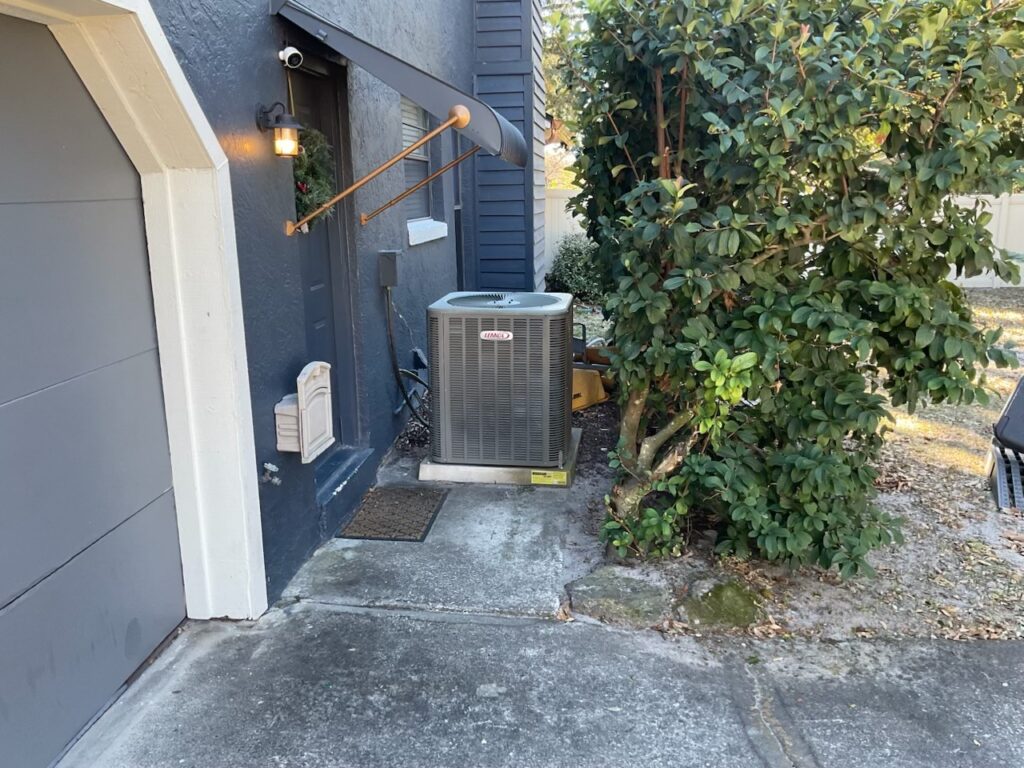
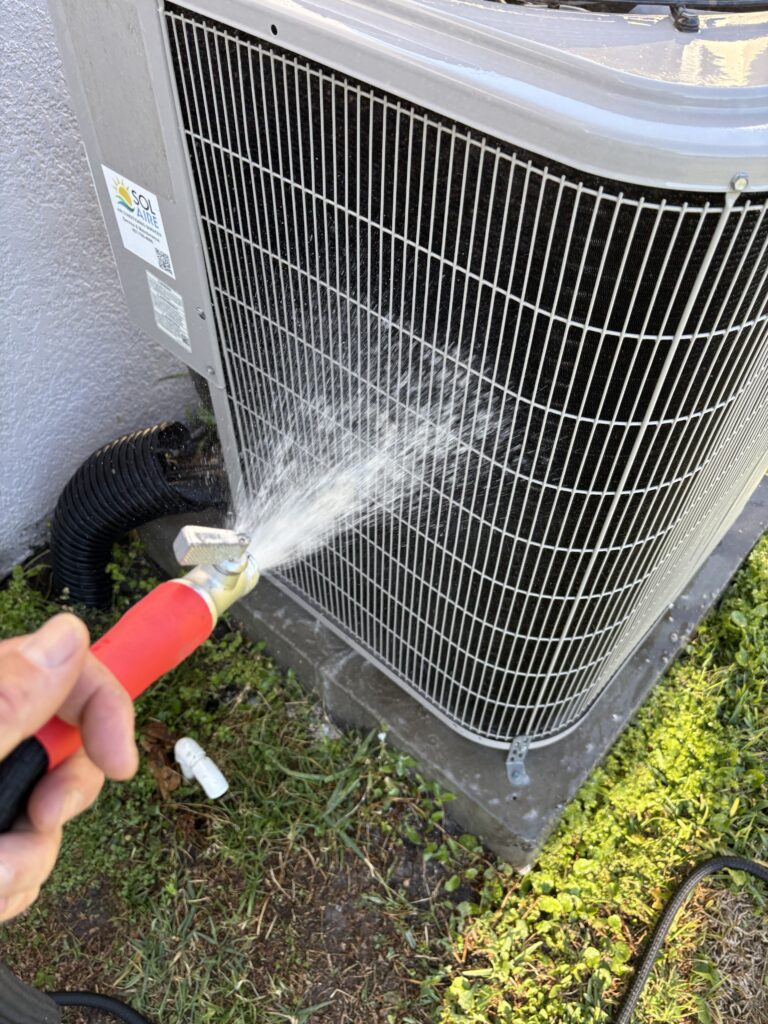
Airflow across both coils determines whether any of this happens correctly, and it is the variable homeowners have the most control over. A clogged filter starves the evaporator coil of the warm air it needs to keep refrigerant boiling, which drives coil temperature down until condensate freezes into a block of ice and blocks airflow entirely. Outdoor coils face the opposite problem, because grass clippings, dryer lint, pollen, and mulch pack into the fin surfaces and prevent the unit from rejecting heat, which drives head pressure up and forces the compressor to work harder for less capacity. Crushed flex duct, closed supply registers, and undersized return grilles all restrict airflow in ways that never announce themselves with an obvious symptom, they simply raise your electric bill quietly for years. A technician measuring static pressure and temperature split can identify these restrictions in a single visit and tell you exactly where the system is losing performance. Need your system checked before the peak of cooling season? Click here for our air conditioning service.
Refrigerant Charge And How A Heat Pump Works In A Warm Climate
Refrigerant charge is the single most misunderstood part of how a heat pump works in a warm climate, largely because refrigerant is not consumed the way fuel or oil is consumed. A sealed system that was charged correctly at installation should hold that same charge for the entire life of the equipment, so a low system means there is a leak somewhere in the coils, the line set, the service valves, or a brazed joint. Topping off a system without finding that leak is a temporary fix that wastes money and puts the compressor at risk, because refrigerant also carries oil back to the compressor and a low charge means poor lubrication. Undercharged systems run with abnormally low suction pressure, superheat climbs, and the compressor loses the cool suction gas that normally carries heat away from its motor windings. Over time that thermal stress is what actually kills compressors, and the failure usually gets blamed on age rather than the small leak that had been quietly draining the system for three summers.
Overcharging causes its own set of problems and happens more often than people expect, usually when someone adds refrigerant based on gauge pressure alone instead of measuring superheat and subcooling. Too much refrigerant floods the condenser with liquid, reduces the surface area available for heat rejection, and drives head pressure up until the compressor draws excessive amperage. In extreme cases liquid refrigerant makes it back to the compressor suction port, and because liquids do not compress, the result is mechanical damage to valves and rods. A correctly charged system shows a superheat and subcooling reading that falls within the manufacturer specification for the current outdoor and indoor conditions, which is why a real diagnosis includes measuring wet bulb temperature and outdoor ambient. Sol Aire Air Conditioning technicians weigh in charge on new installations and verify with subcooling, because guessing on charge is the fastest way to lose the efficiency you paid for.
Florida presents a particular challenge with line set condition, since many homes have refrigerant lines that were installed decades ago and reused across multiple equipment changes. Insulation on the suction line degrades under UV exposure, sections get crushed during landscaping or roof work, and older lines can hold residual oil that is incompatible with modern refrigerants. When a system is replaced, the line set needs to be evaluated, flushed or replaced, and pressure tested with nitrogen before the new equipment ever gets charged. Skipping the nitrogen pressure test and the deep vacuum is where a lot of premature failures begin, because moisture left inside a system combines with refrigerant and oil to form acids that eat away at internal components. A proper evacuation to five hundred microns with a micron gauge takes time, and it is one of the clearest signals of whether an installer is doing the job correctly.
Long Run Times And How A Heat Pump Works In A Warm Climate
Homeowners frequently call about a heat pump that seems to run constantly during July and August, and in most cases the equipment is behaving exactly as designed. Air conditioning systems are sized to hold indoor temperature at design conditions, which in Central Florida means roughly ninety three degrees outdoor dry bulb, and on days that exceed that the system will simply run continuously. Continuous operation at full load is not damaging to a properly maintained heat pump, it is the intended behavior, and it produces better humidity control than short cycling does. The concern arises when run times are long and the house still is not reaching setpoint, which points to a capacity problem rather than a sizing problem. Measuring the temperature difference between return and supply air gives a quick indicator, since a healthy system in cooling should produce somewhere between eighteen and twenty two degrees of split depending on indoor humidity.
Duct losses account for a surprising share of capacity loss in Florida homes, particularly where ductwork runs through an unconditioned attic that reaches one hundred thirty degrees on a summer afternoon. Air leaving the air handler at fifty five degrees can pick up several degrees of heat before it ever reaches the farthest supply register, and leaks in the supply side dump conditioned air directly into the attic. Return side leaks are worse in some ways, because they pull superheated attic air into the system and force the equipment to cool air that never came from your living space. Sealing and insulating ductwork often delivers a larger comfort improvement than replacing the equipment itself, and it costs a fraction of the price. Wondering if your ductwork is the real problem? Click here for our air duct services.
Thermostat behavior also plays into perceived run time, and setback strategies that work in northern climates do not always translate to Florida. Raising the thermostat ten degrees while you are at work sounds efficient, but recovering from that setback on a humid afternoon requires the system to remove both sensible heat and a large amount of moisture that has accumulated in furniture, drywall, and carpet. A modest setback of two or three degrees generally saves energy without creating a humidity spike, while aggressive setbacks can leave the house feeling sticky for hours after the temperature reads correctly. Smart thermostats that learn recovery time help, though the humidity issue remains a matter of physics rather than programming. Want better control over your comfort and energy use? Click here for our thermostat services.
What Changes In Heating Mode And How A Heat Pump Works In A Warm Climate Winter
Central Florida winters are mild, but Sanford, DeLand, and Deltona all see nights in the thirties and occasional stretches near freezing, which is when the heating side of your heat pump earns its keep. A reversing valve inside the outdoor unit changes the direction of refrigerant flow, turning the outdoor coil into an evaporator and the indoor coil into a condenser. The system then absorbs heat from outdoor air, even air that feels cold to you, and moves that heat into your home using the same compressor and the same refrigerant. Because it is moving existing heat instead of generating it, a heat pump delivers far more heating output per kilowatt hour than electric resistance strips do. This is precisely why heat pumps dominate in warm climates, since the mild winter temperatures keep the system operating in its most efficient range nearly all season.
Reversing Valve Function And How A Heat Pump Works In A Warm Climate Heating
The reversing valve is a four port solenoid controlled component that redirects high pressure discharge gas to either the indoor or outdoor coil depending on the mode selected. In cooling, discharge gas goes outdoors and the outdoor coil condenses refrigerant, while in heating the valve sends that hot gas indoors so your air handler coil becomes the condenser. You can often hear the valve shift, since it produces a distinct whooshing sound as pressures equalize and refrigerant changes direction inside the system. That noise is normal and typically lasts a few seconds, though a valve that is sticking or partially shifting will cause the system to blow lukewarm air in heating or fail to switch modes at all. Because the valve carries full discharge pressure, an internal leak across its ports lets hot gas bypass the circuit and shows up as poor performance in both modes.
Defrost operation is the other function that distinguishes heating mode, and it confuses homeowners more than almost any other heat pump behavior. When the outdoor coil is absorbing heat on a cold, damp night, its surface temperature drops below the dew point and frost accumulates on the fins, which blocks airflow and reduces capacity. The control board monitors coil temperature and run time, then briefly reverses the system back into cooling mode to send hot gas through the outdoor coil and melt that frost away. During defrost, the outdoor fan stops, steam rises off the unit, and electric heat strips energize indoors to keep supply air from feeling cold. Neighbors sometimes report a heat pump that appears to be steaming or smoking on a winter morning, and in nearly every case it is a normal defrost cycle doing exactly what it should.
Auxiliary heat strips supplement the heat pump when outdoor temperatures drop far enough that the system cannot keep up, and in Florida that threshold is rarely crossed for long. Those strips are electric resistance elements, essentially large toasters in the air handler, and they consume far more electricity per unit of heat than the compressor does. A thermostat displaying auxiliary heat or emergency heat for hours during a mild forty degree night usually signals a problem such as low charge, a failed reversing valve, or a miswired thermostat calling for strips too aggressively. Sol Aire Air Conditioning checks balance point settings and lockout controls during heating season service so the strips only engage when they are genuinely needed. Need your heating side inspected before winter? Click here for our heat pump services.
Efficiency Ratings And How A Heat Pump Works In A Warm Climate Year Round
Efficiency for heat pumps is expressed with two primary numbers, SEER2 for cooling performance and HSPF2 for heating performance, both of which are seasonal averages rather than fixed measurements. SEER2 reflects cooling output over an entire season divided by the electricity consumed, using test conditions updated in 2023 to better account for real world duct static pressure. Higher SEER2 equipment uses variable speed compressors and blowers that modulate output to match load instead of cycling on and off at full capacity. In a climate like Central Florida where cooling runs most of the year, the cooling rating carries far more financial weight than the heating rating does, simply because of the sheer number of operating hours. A jump from fourteen to eighteen SEER2 can produce meaningful savings here that the same upgrade would never deliver in a cooler part of the country.
HSPF2 matters less in Florida than it does in Atlanta or Nashville, but it is not irrelevant, particularly during a cold snap when the system runs for several consecutive days. Ratings assume a mix of outdoor temperatures across a heating season, so a unit rated in a colder climate zone will show different numbers than the same equipment rated for the southern zone. What matters more for local homeowners is the balance point, the outdoor temperature at which heat pump output equals the home heat loss, since below that point the strips carry the difference. A well insulated house with tight ducts has a lower balance point, meaning the compressor handles more of the load and your bill stays lower. Improving envelope performance therefore raises effective heating efficiency without touching the mechanical equipment at all.
Installation quality influences real world efficiency more than the nameplate rating does, which is a point worth emphasizing because it rarely appears in manufacturer marketing. A twenty SEER2 system installed with a leaky duct system, incorrect charge, and improper airflow will underperform a properly installed fifteen SEER2 unit every single time. Commissioning steps such as verifying external static pressure, setting blower taps or airflow programming, confirming subcooling, and checking line voltage all determine whether you actually receive the efficiency you paid for. Sol Aire Air Conditioning documents these measurements at startup so the homeowner has a baseline to compare against in future years. Curious about ductless options for additions or garages? Click here for our mini split services.
Maintenance Requirements And How A Heat Pump Works In A Warm Climate
Heat pumps in Florida accumulate operating hours at a rate that would take two or three years to reach in a northern climate, which changes the maintenance conversation entirely. Manufacturers generally recommend service twice per year, once before cooling season and once before heating season, and in this region that schedule is a practical necessity rather than an upsell. Coil cleaning, condensate drain treatment, electrical connection tightening, capacitor testing, contactor inspection, and refrigerant verification all prevent failures that tend to happen on the hottest day of the year. Capacitors in particular degrade with heat exposure and are one of the most common causes of a no cooling call, though they can be tested and replaced proactively for a fraction of the cost of an emergency visit. Regular service also preserves manufacturer warranty coverage, since most warranties require documented annual maintenance.
Condensate management deserves specific attention here because Florida humidity produces an enormous volume of water. A three ton system can pull ten to twenty gallons of water out of the air on a humid day, and all of it has to leave the house through a drain line that is often three quarters of an inch in diameter. Biological growth forms inside that line, combines with dust and algae, and eventually creates a clog that backs water into the pan and onto your ceiling or flooring. Float switches provide protection by shutting the system down when the pan fills, but a switch that has never been tested is not protection at all. Flushing the drain, treating it, and verifying the safety switch are routine tasks that prevent expensive water damage claims every summer.
Air filtration is the maintenance item homeowners handle themselves, and getting it right requires balancing filtration quality against airflow restriction. A one inch pleated filter with a very high MERV rating can create enough pressure drop to reduce system airflow below the manufacturer minimum, which lowers capacity and can freeze the coil. Media filters four or five inches deep provide far better filtration with much less resistance because of the larger surface area, and they only need changing once or twice per year. Filter changes should happen on a schedule tied to your household, since pets, construction dust, and open windows all shorten filter life considerably. A technician can measure pressure drop across your filter and tell you exactly what your system can tolerate.
Why You Need Professional Heat Pump Service In Central Florida
Heat pump systems combine high voltage electrical components, pressurized refrigerant circuits, and control logic that requires proper diagnostic tools to evaluate correctly. Guessing at a problem or replacing parts without measurement usually costs more than a proper diagnosis, and it leaves the underlying issue unresolved. Florida’s operating conditions accelerate wear on capacitors, contactors, coils, and drain lines in ways that homeowners in other regions never encounter. Working with a licensed contractor who understands local load conditions, humidity behavior, and code requirements protects both your equipment and your home. Sol Aire Air Conditioning serves Sanford, Lake Mary, Longwood, Oviedo, Winter Springs, DeLand, Deltona, and the surrounding communities with technicians who measure rather than guess.
Professional Heat Pump Service Protects Your Equipment Investment
A modern heat pump represents a significant investment, and the difference between a system that lasts eight years and one that lasts fifteen usually comes down to installation quality and consistent service. Compressor failures, the most expensive repair on any system, almost always trace back to a condition that could have been caught earlier, such as low charge, restricted airflow, or a failing capacitor. Catching those conditions requires actual measurement of superheat, subcooling, amp draw, and static pressure rather than a visual inspection. Documented maintenance also keeps manufacturer warranties intact, which matters greatly on parts that carry ten year coverage. Regular attention costs far less over the life of the system than a single emergency replacement does.
Diagnostic accuracy saves money in a way that becomes obvious the first time a homeowner gets a second opinion. Symptoms overlap constantly in HVAC work, and a system blowing warm air could indicate anything from a failed capacitor to a stuck reversing valve to a simple thermostat wiring fault. A technician who tests systematically will identify the actual failure instead of replacing the most expensive component and hoping. Sol Aire Air Conditioning provides free estimates with honest, no pressure recommendations so you understand your options before committing to anything. That approach builds long term relationships rather than one time transactions.
Emergency situations happen, and having a relationship with a contractor who knows your equipment shortens response time considerably. When a technician has service history on your system, they arrive knowing the model, the refrigerant type, the previous repairs, and the components most likely to be involved. That familiarity turns a lengthy diagnostic visit into a targeted repair, which gets your home comfortable again faster. Financing options are available for larger repairs and replacements, so an unexpected failure does not have to become a financial crisis. Communication throughout the process keeps you informed rather than guessing about what is happening in your home.

Professional Heat Pump Service Improves Comfort And Energy Costs
Comfort problems rarely have a single cause, and solving them usually means looking at the whole system rather than just the equipment in the yard. Uneven temperatures between rooms often point to duct design issues, return air limitations, or insulation gaps rather than an undersized condenser. A contractor who evaluates airflow room by room can recommend targeted fixes that cost far less than equipment replacement while delivering a noticeably better result. Humidity complaints similarly trace back to sizing, run time, and duct leakage more often than they trace back to equipment quality. Addressing the actual cause produces lasting improvement instead of temporary relief.
Energy costs in Florida are driven overwhelmingly by cooling season operation, which means small efficiency gains compound across thousands of run hours. Cleaning a dirty outdoor coil, correcting a low charge, or sealing return duct leaks can cut consumption noticeably without any equipment change. Utility bills that climb year over year while usage patterns stay constant are a reliable signal that system performance has drifted. A technician can quantify that drift with measurements and tell you what recovering the lost efficiency will cost. Many homeowners find that the repair pays for itself within a single cooling season.
Indoor air quality connects directly to how your heat pump operates, since every cubic foot of air in your home passes through the system repeatedly. Dirty coils harbor biological growth, leaky return ducts pull attic dust and insulation fibers into the airstream, and poor humidity control encourages mold in wall cavities and around registers. Correcting these conditions improves the air your family breathes while also protecting the equipment from premature failure. Sol Aire Air Conditioning addresses air quality as part of overall system health rather than treating it as an unrelated add on product. The result is a home that feels better and equipment that lasts longer.
Why Choose Sol Aire Air Conditioning For Heat Pump Service
Sol Aire Air Conditioning brings over fifty years of combined industry experience to every call, and that depth shows up in accurate diagnosis and clean installation work. Every technician is background checked, which gives homeowners peace of mind about who is entering their home. The company is a licensed and insured HVAC contractor in Florida, holding Daikin Pro, Mitsubishi Diamond, and Navien certified dealer status. Those manufacturer credentials require ongoing training and performance standards, and they translate into better warranty terms for customers. Old fashioned customer service with clear communication remains the foundation of how the business operates.
Free estimates come with honest, no pressure recommendations, meaning you get a straight explanation of your options and the reasoning behind each one. Repair versus replace decisions get evaluated on actual system condition, age, refrigerant type, and repair cost rather than on a sales quota. Financing options are available for your next HVAC service, which makes larger projects manageable without delaying necessary work. Written documentation of measurements and findings gives you a record to reference in future years. Homeowners deserve to understand what is happening with their equipment, not just be handed a price.
Service coverage extends across Seminole and Volusia County, including Sanford, Lake Mary, Heathrow, Longwood, Altamonte Springs, Casselberry, Winter Springs, Oviedo, Chuluota, Geneva, Osteen, DeBary, DeLand, Deltona, Orange City, Lake Helen, and Wekiwa Springs. Call the office at (407) 789-4000 or email service@solaireac.com to schedule an appointment or ask a question. The team at 4380 St Johns Pkwy # 120 in Sanford handles residential and light commercial work across cooling, heating, ductwork, and indoor air quality. Scheduling maintenance before peak season means shorter wait times and fewer surprises during the hottest weeks of the year. Reach out today and get your heat pump evaluated by technicians who take the work seriously.