
When To Schedule Your Fall HVAC Tune Up
Central Florida homeowners spend most of the year running their air conditioners, and by the time late August arrives, that system has already logged thousands of hours of continuous operation. A fall HVAC tune up is the checkpoint that catches the wear from that long cooling season before it turns into a breakdown, and the timing of that appointment matters more than most people realize. Scheduling too late means competing with every other homeowner in Seminole and Volusia County for the same appointment slots, while scheduling at the right moment gives your technician time to order parts, correct refrigerant issues, and clean components without rushing. The ideal window for a fall HVAC tune up in Florida runs from late August through October, well before the first cold front pushes overnight temperatures into the fifties. Heat pumps deserve special attention during this window because they carry the entire heating load in this climate, and a system that cooled reliably all summer can still fail the moment it reverses into heating mode. Waiting until you actually need heat is how small problems become emergency calls. A properly timed fall HVAC tune up protects efficiency, extends equipment life, and gives you a clear picture of what your system needs before the holidays arrive.
Why Fall HVAC Tune Up Timing Matters in Central Florida
The Florida climate creates a maintenance calendar that looks nothing like the one used in northern states, and that difference changes when your fall HVAC tune up should happen. Cooling season here stretches from March into November, which means your equipment has almost no true off season and very little recovery time between demands. When a cold front finally does arrive, it often shows up suddenly, dropping temperatures thirty degrees in a single afternoon and forcing systems into heating mode for the first time in ten months. Components that sat idle through that long stretch, including reversing valves, auxiliary heat strips, and sequencers, are exactly the parts most likely to fail on that first cold night. Booking a fall HVAC tune up in late summer or early fall means those parts get tested under controlled conditions rather than discovered in an emergency. It also means you are ahead of the seasonal rush instead of behind it.
The Best Calendar Window for a Fall HVAC Tune Up
Late August through the end of October represents the sweet spot for a fall HVAC tune up in Sanford, Lake Mary, Longwood, and the surrounding communities. During these weeks, cooling demand begins to soften slightly as afternoon highs drop out of the mid nineties, which gives a technician the ability to shut the system down for a full diagnostic without leaving your home uncomfortable for hours. Refrigerant charge readings taken in this window are still accurate because outdoor temperatures remain high enough to load the system properly, something that becomes much harder to verify once daytime highs fall into the sixties. That accuracy matters because an undercharged or overcharged system quietly destroys efficiency and shortens compressor life long before it produces any obvious symptom. Technician availability is also far better in this window, meaning you can pick an appointment time that fits your schedule rather than accepting whatever slot remains. If a part needs to be ordered, there is time for it to arrive and be installed without leaving you without heating or cooling.
Homeowners who wait until the first cold snap discover that everyone else made the same decision at the same moment. The first weekend that overnight lows dip into the forties generates a wave of no heat calls across Central Florida, and those emergency calls take priority over routine maintenance appointments. That means a tune up scheduled in mid November might get pushed into December, and by then the system has already been running in heating mode with whatever problems it had going into the season. The cost difference is real as well, because a maintenance visit that catches a weak capacitor is dramatically cheaper than an after hours service call for a system that will not start. Planning ahead removes that pressure entirely. It also gives you time to make informed decisions about repairs rather than approving whatever gets recommended while your house is cold.
There is a second consideration specific to Florida that pushes the ideal window even earlier for some homeowners. Hurricane season runs through the end of November, and power surges, extended outages, and flooding around outdoor units all take a toll on HVAC equipment. A fall HVAC tune up scheduled after a storm event gives a technician the chance to inspect the disconnect, check the contactor for pitting from surge damage, and verify that the condenser pad has not shifted or settled. Water intrusion into an air handler closet or attic space can also promote mold growth in the ductwork, which affects both air quality and airflow. Catching that early keeps a nuisance from becoming a remediation project. Need a full system inspection before the season changes? Click here for our air conditioning services.
What Happens When You Delay Your Fall HVAC Tune Up
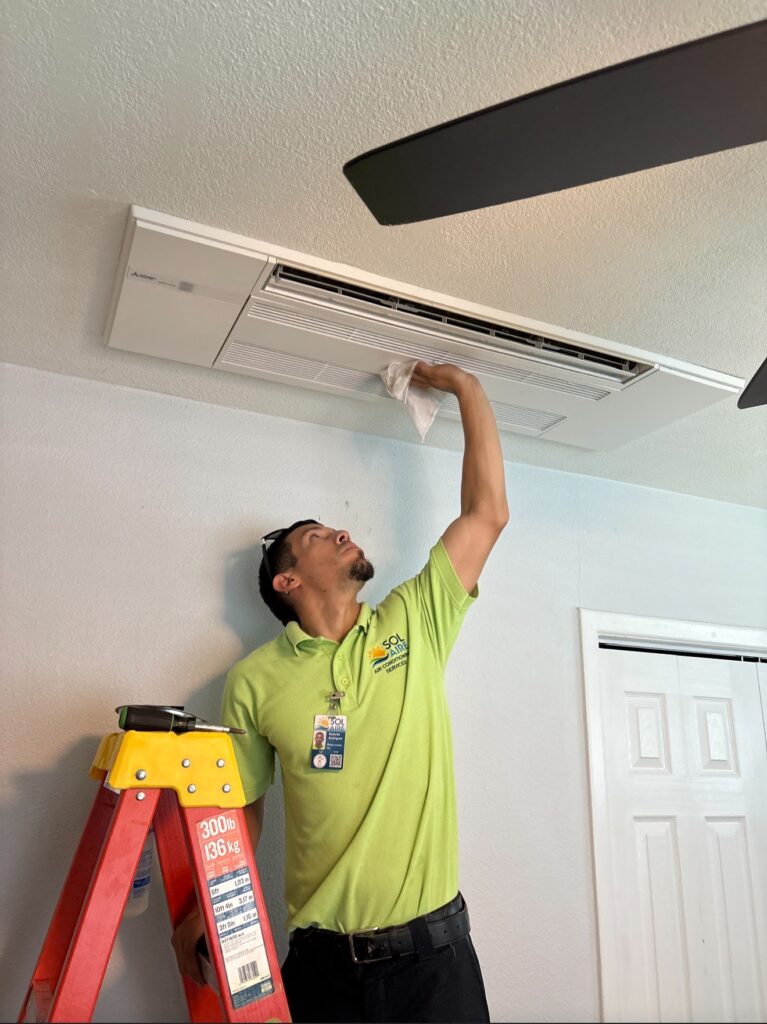
Delaying a fall HVAC tune up allows small mechanical issues to compound quietly through the remainder of the cooling season. A condenser coil coated with pollen, grass clippings, and road dust cannot reject heat efficiently, which raises head pressure and forces the compressor to work harder for the same cooling output. That extra work translates directly into higher electric bills, and it also accelerates wear on the compressor windings and the start components. Blower wheels accumulate a similar layer of buildup on the air handler side, and a dirty blower wheel can lose a significant percentage of its rated airflow without producing any noise a homeowner would notice. Reduced airflow lowers coil temperature, which can lead to freezing, water damage from overflowing drain pans, and eventually liquid refrigerant returning to the compressor. None of these problems announce themselves early, which is precisely why scheduled maintenance exists.
Drainage problems represent one of the most common consequences of a skipped or delayed tune up in Florida. Condensate lines running through humid attics collect biological growth all summer long, and a line that is partially restricted in September will very likely be fully blocked by October. When that happens, the secondary drain pan fills, the float switch trips, and the system shuts down, or worse, water finds its way into ceilings and wall cavities. A tune up includes flushing that line and verifying that the float switches actually function, which takes minutes during a scheduled visit and hours during a water damage response. The repair cost difference between the two scenarios is substantial. Homeowners who have dealt with a ceiling stain from a clogged drain line rarely skip maintenance again.
Electrical components deserve equal attention because they fail suddenly rather than gradually. Capacitors weaken over time, losing microfarad capacity until they can no longer start the compressor or the blower motor, and Florida heat accelerates that decline considerably. A technician measuring a capacitor that has drifted ten percent below its rating can replace it during a routine visit for a fraction of what an emergency call costs. Contactors develop pitted and burned contacts from years of arcing, and a failing contactor can weld shut, leaving the outdoor unit running continuously even when the thermostat is satisfied. Loose electrical connections generate heat, which degrades wire insulation and creates a genuine fire risk inside the air handler cabinet. Tightening those connections and torquing lugs to specification is a standard part of any thorough fall HVAC tune up.
Heat Pump Considerations for Your Fall HVAC Tune Up
Most Central Florida homes rely on heat pumps rather than gas furnaces, and that changes what a fall HVAC tune up needs to accomplish. A heat pump uses the same refrigerant circuit for both heating and cooling, reversing the flow through a component called the reversing valve to move heat into the home instead of out of it. That valve sits idle for the entire cooling season, and solenoid coils fail, valves stick mid position, and slide assemblies bind after long periods without cycling. A technician performing a fall tune up will command the system into heating mode specifically to verify that the valve shifts cleanly and completely. Discovering a stuck reversing valve in September gives you weeks to schedule the repair, while discovering it in January means running on expensive auxiliary heat until parts arrive. That single test justifies the timing of the appointment.
Auxiliary heat strips are the second heat pump component that only reveals problems when tested directly. These electric resistance elements provide supplemental heat when outdoor temperatures drop below the point where the heat pump can keep up, and they draw substantial amperage when they engage. Sequencers stage those elements on and off, and a failed sequencer can leave strips energized continuously, sending electric bills to alarming levels, or prevent them from engaging at all, leaving the home cold on the coldest nights. Limit switches protect against overheating, and a limit that has drifted out of calibration will nuisance trip or fail to protect. Amperage draw on each element should be measured and compared against nameplate specifications during the tune up. Elements that read low have likely developed breaks, and those need replacement before cold weather.
Defrost controls round out the heat pump specific portion of a fall HVAC tune up. When outdoor temperatures fall into the forties with high humidity, frost forms on the outdoor coil and must be periodically melted off, which the system accomplishes by briefly reversing into cooling mode while running the auxiliary heat. Defrost boards, sensors, and timers all participate in that sequence, and a failure anywhere in the chain lets ice build until airflow across the outdoor coil stops entirely. Florida humidity makes frost formation more likely than many homeowners expect, even at temperatures that seem too mild for ice. Verifying defrost operation requires specific test procedures that a qualified technician performs during the visit. Ready to have your heat pump checked before the first cold front? Click here for our heat pump services.
What a Complete Fall HVAC Tune Up Should Include
A fall HVAC tune up should follow a documented checklist rather than a quick visual inspection, and the difference between those two approaches shows up in system reliability months later. Real maintenance involves measurement, and measurement requires gauges, meters, and thermometers rather than an experienced eye alone. Static pressure readings, temperature splits, refrigerant subcooling and superheat, capacitor microfarad values, and amperage draws all produce numbers that can be compared against manufacturer specifications and against prior visits. Trending those numbers over multiple years reveals gradual decline long before it becomes a failure. A thorough visit also includes cleaning work that directly affects performance, not just component checks. When the visit ends, you should receive documentation of what was measured and what was found.
The Mechanical Portion of a Fall HVAC Tune Up
Coil cleaning sits at the center of the mechanical work during a fall HVAC tune up because heat transfer surfaces determine how efficiently the entire system operates. The outdoor condenser coil in Florida collects pollen in spring, grass clippings all summer, and salt or mineral deposits depending on location, and that layer acts as insulation on a surface designed to shed heat. Cleaning requires the correct coil cleaner for the metal involved along with careful rinsing that does not bend the delicate aluminum fins. Fin combs can restore airflow through areas that have been flattened by lawn equipment or weather. The indoor evaporator coil needs inspection as well, because a coil coated in dust and biological growth restricts airflow and lowers capacity. Coils that are truly fouled sometimes require removal for proper cleaning, which is far easier to schedule in October than in the middle of a heat wave.
Blower assembly service makes up the second major mechanical task. The blower wheel moves every cubic foot of air through your home, and buildup on the individual blades changes the wheel geometry enough to reduce airflow measurably. Cleaning that wheel properly means removing the blower assembly, cleaning the blades individually, and reinstalling with the correct wheel position relative to the housing. Motor bearings should be checked for play and noise, and motors with oil ports should be lubricated where applicable. Belt driven blowers, more common in older commercial equipment, need belt tension and alignment verification. Restoring rated airflow improves comfort in every room and lowers the energy required to move that air.
Drainage and airflow verification complete the mechanical work. The primary condensate line gets flushed and treated, drain pans get cleaned, and float switches get tested by actually raising the float rather than assuming the switch works. Filter racks should seal properly, because air that bypasses the filter carries dirt directly onto the evaporator coil and the blower wheel. Duct connections at the air handler get inspected for separation, crushed flex, and disconnected boots, all of which are common in Florida attics where heat and time break down mastic and tape. Static pressure measured across the system tells the technician whether the duct system can actually support the equipment installed. High static pressure shortens equipment life and is one of the most overlooked issues in residential HVAC. Concerned about airflow or duct condition in your home? Click here for our air duct services.
The Electrical and Control Portion of a Fall HVAC Tune Up
Electrical testing during a fall HVAC tune up covers everything from the disconnect at the outdoor unit to the low voltage wiring at the thermostat. Voltage should be measured at the unit while running, not just at rest, because voltage drop under load reveals undersized wiring, corroded connections, or utility supply problems. Amperage draw on the compressor, condenser fan motor, and blower motor gets compared against the rated load amps listed on the data plate, and readings that climb above specification point to mechanical binding, failing bearings, or refrigerant issues. Capacitor testing requires a meter capable of reading microfarads, and any capacitor reading outside its tolerance band should be replaced regardless of whether the system currently starts. Contactor contacts get inspected for pitting and burning. These are inexpensive parts whose failure causes expensive inconvenience.
Control wiring and safety devices receive the same scrutiny. Low voltage wire that runs through attics gets brittle, and rodents chew insulation, creating intermittent faults that produce symptoms nearly impossible to diagnose during a short service call. Terminal connections at the air handler board, the thermostat, and the outdoor unit should be checked for tightness and corrosion. High pressure and low pressure switches protect the compressor and should be verified as functional rather than assumed. Float switches, as mentioned, get tested physically. Ground connections matter for both safety and for the operation of certain control boards.
Thermostat operation deserves its own attention because it controls everything else. Calibration should be verified against an accurate thermometer placed at the same height and location, and a thermostat reading three degrees off will cause constant comfort complaints no matter how well the equipment performs. Staging setup matters on multi stage and variable speed systems, where incorrect configuration can lock out higher capacity stages or cause auxiliary heat to run when it should not. Programmable and smart thermostats need their schedules reviewed, especially after power outages that may have reset settings. Heat pump thermostats specifically need proper configuration of the changeover setting and the balance point for auxiliary heat. Getting this wrong costs money every single day the system runs. Thinking about upgrading your controls this fall? Click here for our thermostat services.
Refrigerant and Performance Testing During a Fall HVAC Tune Up
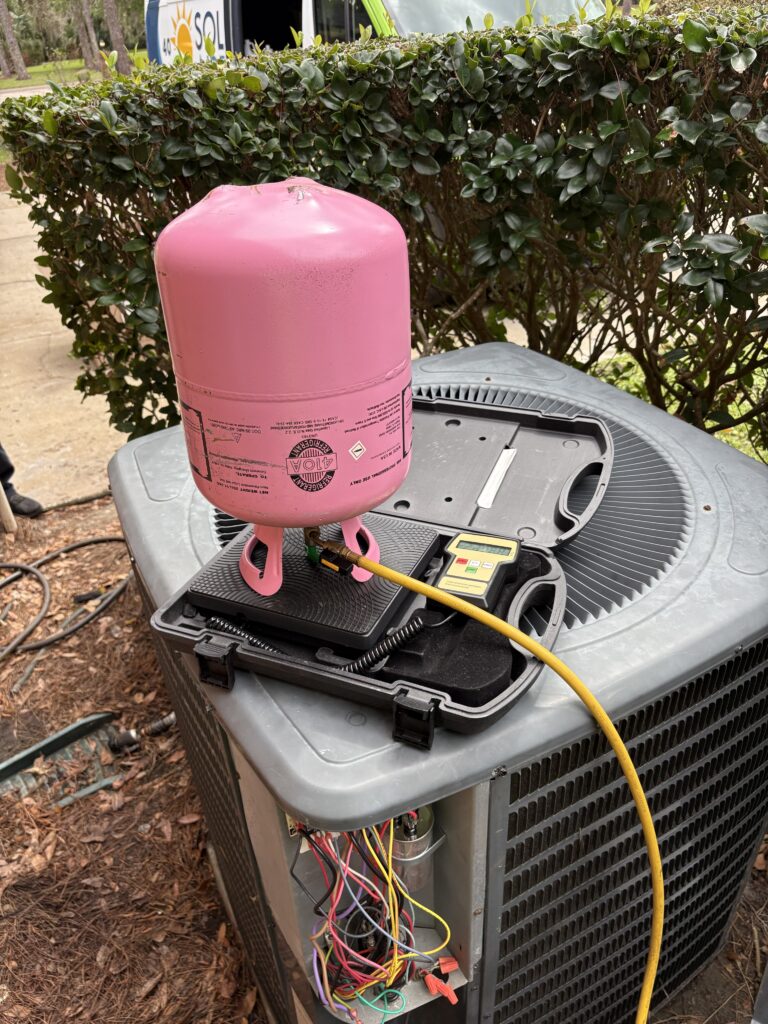
Refrigerant charge verification is one of the most technically demanding parts of a fall HVAC tune up, and it is also one of the most frequently done poorly. Charge cannot be judged by pressure alone; it requires measuring superheat on fixed orifice systems or subcooling on systems with a thermostatic or electronic expansion valve, then comparing those values against the manufacturer charging chart for the specific outdoor conditions present. This is exactly why the timing of a fall tune up matters, since accurate charge verification needs adequate outdoor temperature to load the system. A system running even slightly low on refrigerant loses capacity and efficiency, and the leak causing that condition will only worsen. Overcharged systems can flood the compressor with liquid refrigerant, which destroys it. Correct charge is not optional for reliability or efficiency.
Any system found low on refrigerant needs a leak investigation rather than a simple top off. Refrigerant does not get consumed during normal operation, so a low charge means refrigerant escaped somewhere, most commonly at the evaporator coil, the line set connections, or the service valves. Florida installations face additional corrosion risk from humidity and, in coastal areas, salt air, which attacks copper and aluminum over time. Electronic leak detection, bubble solution, and dye can all play a role in locating the source. Repeatedly adding refrigerant without repair is both expensive and environmentally irresponsible, and current regulations increasingly restrict that practice. Finding a leak in the fall gives you time to plan the repair.
Performance measurement ties all the individual tests together into a picture of how the system actually operates. Temperature split across the evaporator coil, measured as the difference between return air and supply air, indicates whether the system is producing rated capacity, though it must be interpreted alongside humidity and airflow. Compressor discharge and suction line temperatures reveal compression problems that pressure readings alone can miss. Total external static pressure compared against the equipment rating tells you whether the duct system is choking the equipment. Documenting these values creates a baseline you can compare against next year, turning maintenance into a trend line rather than a series of isolated visits. That trend data is what allows honest conversations about repair versus replacement before an emergency forces the decision.
Why You Need a Professional Fall HVAC Tune Up From Sol Aire
A fall HVAC tune up delivers value that goes well beyond a clean filter and a quick look at the outdoor unit. It protects the largest mechanical investment in your home, keeps energy costs predictable during a season when Florida homeowners often see bills climb from auxiliary heat use, and preserves manufacturer warranty coverage that frequently requires documented annual maintenance. It also gives you information, which is the thing most homeowners lack when a system fails unexpectedly and they are forced into a decision under pressure. Sol Aire Air Conditioning approaches maintenance as a professional service with measurable outcomes, not as a sales opportunity. Our technicians document what they find, explain what it means, and let you decide. That approach has served homeowners across Seminole and Volusia County for years.
Protecting Efficiency and Comfort With a Fall HVAC Tune Up
Efficiency losses happen gradually, which is what makes them so easy to ignore until the electric bill arrives. A system with a dirty condenser coil, a partially blocked evaporator, and a slightly low refrigerant charge can easily consume twenty percent more electricity than the same system properly maintained. Across a Florida cooling season that difference adds up to real money, and the fall tune up is what resets that baseline before winter operation begins. Restoring proper airflow also improves humidity control, which affects how comfortable a home feels at any given thermostat setting. Comfort improvements from maintenance are often more noticeable than homeowners expect.
Equipment longevity represents the other major return on a fall HVAC tune up. Compressors fail from heat, from liquid refrigerant return, and from electrical stress, and all three of those conditions trace back to problems that maintenance identifies and corrects. Blower motors last longer when they are not fighting restricted ductwork or a fouled wheel. Heat strips and sequencers last longer when they are not cycling excessively because of a miscalibrated thermostat. Systems that receive consistent annual maintenance routinely outlast neglected systems by several years, and in Florida, where equipment runs nearly year round, those years matter. Replacement is the single largest HVAC expense a homeowner faces.
Warranty protection is the detail most homeowners overlook until they need it. Nearly every major manufacturer, including Daikin and Mitsubishi, conditions parts warranty coverage on proof of annual professional maintenance. A denied warranty claim on a compressor or a coil can cost thousands of dollars that documented maintenance would have covered. Keeping a service record also helps at resale, since buyers and home inspectors both view a maintained system as a lower risk. The documentation costs you nothing beyond scheduling the visit. Considering a ductless system for a room that never stays comfortable? Click here for our mini split services.
Scheduling Your Fall HVAC Tune Up Before the Rush
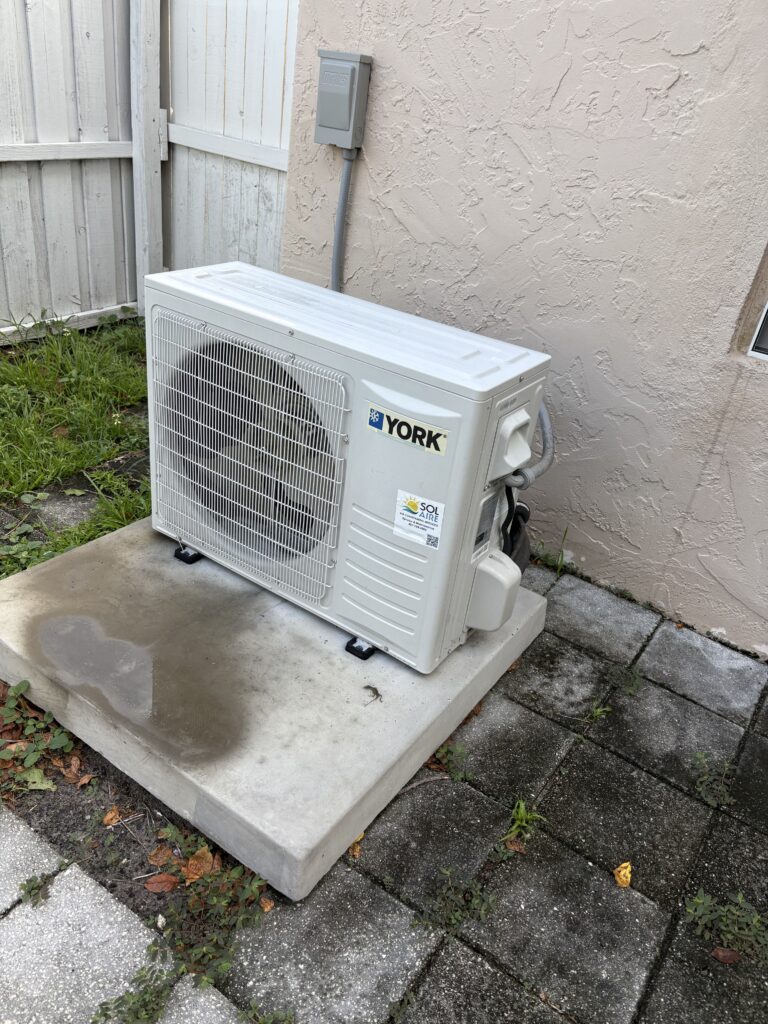
The practical advice is simple: book your fall HVAC tune up before the first cold front appears in the forecast, not after. Appointment availability in September and October allows you to choose a morning or afternoon slot that fits your work schedule instead of taking whatever remains open. If your system needs a part, ordering it during a slow period usually means faster delivery than during a regional cold snap when suppliers are fielding the same request from every contractor in the area. That timing advantage alone can be the difference between a comfortable week and an uncomfortable one. Planning also lets you budget for any recommended repairs rather than absorbing them as an emergency expense.
Homeowners with older equipment gain even more from early scheduling. A system that is twelve or fifteen years old may be approaching the point where a major repair no longer makes financial sense, and that conversation should happen with time to research options, compare efficiency ratings, and consider financing. Sol Aire offers financing options for HVAC service and replacement, which gives you flexibility to make the right long term decision rather than the cheapest immediate one. Rushing a replacement decision during a system failure almost always costs more. Early inspection creates room to think.
Multiple system homes and properties with additions or converted spaces should build in extra time as well. Each system needs its own full inspection, and a home with two or three units simply takes longer to service properly. Rental properties and second homes benefit from a fall visit because problems in unoccupied spaces go unnoticed until damage accumulates. Scheduling all units at once is more efficient for everyone involved. A single call to our office handles the coordination.
Why Choose Sol Aire Air Conditioning for Your Fall HVAC Tune Up
Sol Aire Air Conditioning brings over fifty years of combined industry experience to every fall HVAC tune up we perform, and that depth shows in the quality of the diagnostics rather than the speed of the visit. We are a licensed and insured HVAC contractor in Florida, and we hold Daikin Pro, Mitsubishi Diamond, and Navien certified dealer credentials, which means our technicians receive factory level training on the equipment we service and install. Every technician who comes to your home is background checked, because letting someone into your house should not require a leap of faith. We provide free estimates with honest, no pressure recommendations, and we mean the no pressure part. You will never be told a system needs replacement when it needs a capacitor.
Old fashioned customer service with clear communication is how we operate, and that means explaining findings in plain language and showing you the measurements behind them. Our technicians will walk you through what they found, what it means for your system, and what your options are, including the option to do nothing right now. Financing options are available for larger repairs and replacements, so cost does not have to force a bad decision. We serve Sanford, Lake Mary, Longwood, Altamonte Springs, Winter Springs, Oviedo, Casselberry, Heathrow, DeBary, DeLand, Deltona, Orange City, Geneva, Chuluota, Osteen, Lake Helen, and Wekiwa Springs. Local means we know the equipment, the climate, and the construction styles in these neighborhoods.
Scheduling your fall HVAC tune up takes one phone call. Reach our office at (407) 789-4000 or send a message to service@solaireac.com, and we will find a time that works for your schedule. Our shop is located at 4380 St Johns Pkwy # 120, Sanford, FL 32771, and we dispatch throughout Seminole and Volusia County. Get your system checked while the weather still allows a relaxed, thorough visit. The first cold front is coming, and the homeowners who prepare now are the ones who never think about it when it arrives.