
Why Your AC Smells Musty When It Turns On
A musty smell from your air conditioner is one of the most common complaints homeowners report during the hot Florida summer. That damp, earthy odor usually shows up the moment your system kicks on, and it can spread through every room in the house within minutes. In most cases the smell points to trapped moisture, mold, or mildew hiding somewhere inside your cooling system. Florida humidity makes this problem far more likely, since your AC pulls large amounts of water out of the air every single day. When that moisture is not draining the way it should, it creates the perfect environment for microbial growth. The good news is that a musty AC smell is almost always fixable once you find the source. A few causes are simple enough to handle yourself, while others call for a trained technician and the right equipment. This guide breaks down the real reasons your AC smells musty and shows you exactly how to clear the air for good.
What Causes That Musty AC Smell When Your AC Turns On
The musty odor coming from your vents almost always traces back to moisture that never fully evaporates or drains away. Your air conditioner works by cooling warm air across a cold coil, and that process naturally creates condensation. That water is supposed to collect in a pan and flow safely outside through a drain line. When any part of that moisture handling breaks down, water sits still and mold begins to grow. The three most common culprits are a dirty evaporator coil, a clogged condensate drain line, and a neglected air filter. Each one traps dampness in a slightly different spot inside your system. Understanding which one is behind your smell is the first step toward fixing it. Below we walk through all three so you can pinpoint the source in your own home.
The Dirty Evaporator Coil Behind a Musty AC Smell
The evaporator coil is the part of your air conditioner that gets cold and pulls heat out of your indoor air. Because it stays cold and wet during operation, it is the single most likely place for mold and mildew to take hold. Dust, pet dander, and airborne debris stick to the damp coil over time and form a sticky film. That film feeds bacteria and mold spores, which release the classic musty odor the moment air blows across the coil. Technicians sometimes call the sour version of this problem dirty sock syndrome because of how strong the smell can get. In humid climates like Central Florida, coils build up this growth much faster than in dry regions. A coil that has not been cleaned in a few years is often the true source of a persistent musty smell.
You will usually notice the odor most strongly right when the system starts a cooling cycle. That timing is a clue, because the initial burst of airflow pushes the trapped smell off the coil and straight into your ducts. Weak airflow from your vents can also point to a coil that is coated in grime and biological buildup. Left alone, a dirty coil does more than smell bad; it forces your system to work harder and run longer. That extra strain raises your energy bills and shortens the life of your equipment. Ice can even form on a badly clogged coil, which leads to water damage and bigger repairs. Cleaning the coil restores both the smell and the efficiency of your system.
Coil cleaning is not always a simple do it yourself job, since the coil sits deep inside the air handler and damages easily. The thin aluminum fins bend under too much pressure, and harsh chemicals can corrode the metal if used incorrectly. A professional uses coil safe cleaners and gentle methods that remove the buildup without harming the equipment. They can also spot early signs of refrigerant leaks or drainage problems while they have the unit open. Regular coil inspections keep the musty smell from ever coming back in the first place. Need your evaporator coil checked and cleaned? Click here for our air conditioning service. A clean coil is one of the fastest ways to bring fresh air back into your home.
The Clogged Condensate Drain Line and Musty AC Smell
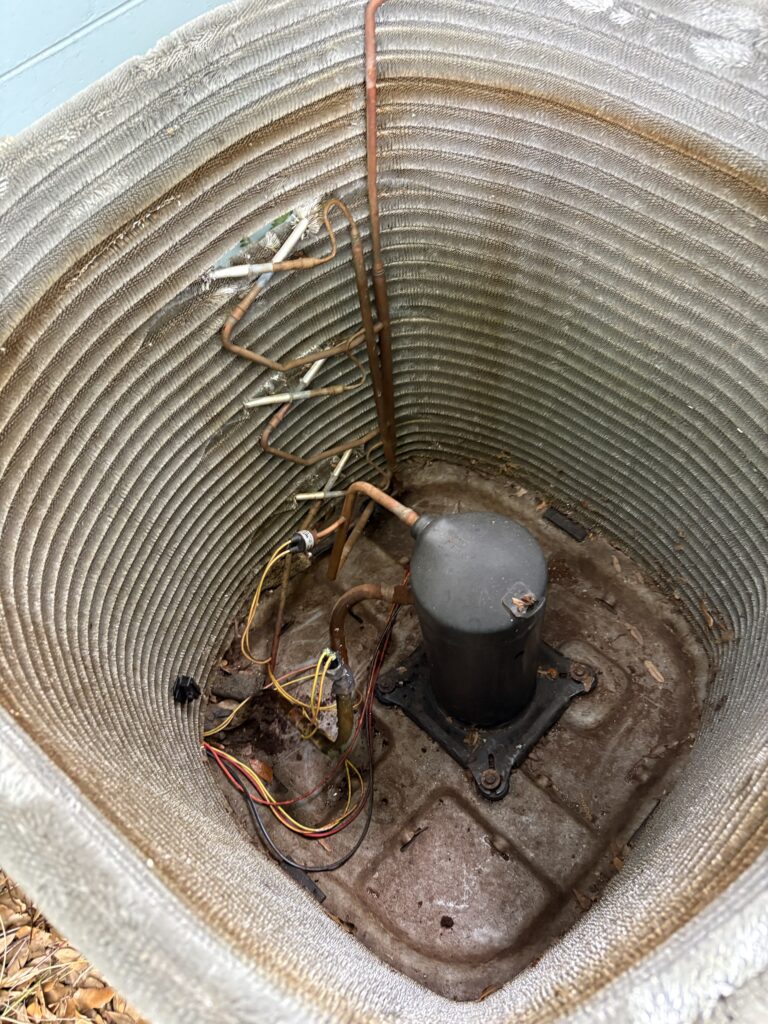
The condensate drain line carries all the water your air conditioner removes from your home out to the exterior. Over a normal cooling season, your system can pull dozens of gallons of moisture out of the air. That water flows into a drain pan and then out through a narrow PVC pipe, usually near your outdoor unit or a nearby sink. When algae, mold, or debris build up inside that line, the water backs up and has nowhere to go. Standing water then sits in the pan and the pipe, growing bacteria and giving off a strong musty or sour smell. This is one of the most frequent causes of AC odor in Florida homes, thanks to our long and humid cooling season. A slow or blocked drain is easy to overlook until the smell or a water leak forces you to notice.
A clogged drain line often shows warning signs beyond the odor itself. You might see water pooling around the indoor air handler or notice damp spots on the ceiling below an attic unit. Many systems include a safety float switch that shuts the AC off completely when the drain backs up too far. If your air conditioner keeps turning itself off on humid days, a full drain pan could be the reason. The moisture that overflows can also feed mold growth on nearby wood, drywall, and insulation. That secondary growth spreads the musty smell even after the drain is cleared. Catching a blockage early keeps a small cleaning job from turning into water damage repairs.
Clearing a condensate line is something many homeowners can start on their own with a wet dry vacuum on the outdoor end of the pipe. Flushing the line with a cup of distilled vinegar every couple of months helps kill algae before it clogs the pipe. Still, a full clog or a line that keeps blocking usually needs a professional with the right tools and a look at the whole drainage path. A technician can clear the line, treat the pan, and confirm that the slope of the pipe lets water flow freely. They can also install treatment tablets that prevent future growth all season long. Keeping this one small pipe clear protects your home from both odors and expensive water damage. A well maintained drain line is a quiet but powerful defense against a musty smelling AC.
The Dirty Air Filter That Creates a Musty AC Smell
Your air filter is the first line of defense against dust, pollen, and other particles moving through your HVAC system. When that filter clogs with debris, it traps moisture along with all the dust it has collected. A damp, dirty filter becomes a breeding ground for mold and mildew in the same way a wet coil does. Every time your system runs, air passes through that soiled filter and carries the musty smell into your living space. In a humid climate, a filter that is left in place too long can start to smell within just a few weeks. Homes with pets, smokers, or ongoing construction clog their filters even faster. The result is a stale, damp odor that seems to come from everywhere at once.
A clogged filter creates problems that reach well beyond the smell. Restricted airflow forces your blower motor to work harder and can cause the evaporator coil to freeze over. When that ice melts, it dumps extra water into the system and feeds even more mold growth downstream. Reduced airflow also means your home takes longer to cool, which drives up your energy costs during peak summer months. Poor filtration lets dust and allergens circulate freely, which affects the health of everyone in the house. People with asthma or allergies often feel the effects of a dirty filter before they ever smell it. A fresh filter protects both your air quality and your equipment at the same time.
Replacing your air filter is the easiest and cheapest fix on this entire list. Most standard filters should be swapped every one to three months, and monthly during heavy summer use. Check the size printed on the frame of your old filter so you buy the correct replacement. A higher MERV rated filter captures more particles, though you should confirm your system can handle the added airflow resistance first. Set a phone reminder so a forgotten filter never becomes the source of a musty smell again. If you change the filter and the odor lingers, the problem likely sits deeper in the coil or ducts. A regular filter routine keeps your air fresh and your system running clean.
How to Get Rid of the Musty Smell From Your AC
Once you know where the musty smell is coming from, removing it becomes a straightforward process. The goal is to eliminate the standing moisture and clean out the mold or mildew that has already formed. Some steps you can handle with basic tools and a little time, while deeper cleaning belongs in the hands of a trained technician. The three most effective moves are cleaning the evaporator coil, clearing the condensate drain, and cleaning the ductwork. Doing all three gives you the best chance of removing the odor completely rather than just masking it. Air fresheners and sprays only cover the smell for a short time and never solve the real problem. The sections below walk through each solution so you can decide what to tackle yourself and when to call for help.
Cleaning the Evaporator Coil to Stop the Musty AC Smell
Cleaning the evaporator coil is often the most important step in removing a stubborn musty smell. The coil sits inside the air handler, so you first have to shut off power to the unit at the breaker for safety. Removing the access panel exposes the coil, which is usually coated in a layer of dust, biofilm, and grime. A no rinse coil cleaner made specifically for HVAC systems is the safest product to use on the delicate fins. You spray the cleaner across the coil, let it foam and break down the buildup, and allow it to drain into the pan. This process kills the mold and lifts away the debris that has been feeding the smell.
The coil fins bend very easily, so gentle handling is critical during any cleaning attempt. A soft brush or a fin comb can straighten bent fins and clear surface debris without tearing the metal. Never use a pressure washer or a stiff wire brush, since either one can shred the fins and ruin the coil. Household cleaners and bleach are also a poor choice because they corrode the aluminum and can damage nearby components. If the buildup is heavy or the coil has visible mold across most of its surface, a professional cleaning is the smarter move. Technicians have access to stronger coil safe products and can remove the coil entirely when a deep clean is needed. They also confirm your refrigerant charge and airflow while the system is open.
A properly cleaned coil transforms both the smell and the performance of your air conditioner. Fresh airflow returns, cooling improves, and your energy bills often drop once the system stops straining against a dirty coil. Many homeowners are surprised at how much stronger their vents feel after a thorough coil cleaning. Keeping the coil clean also prevents the ice buildup that leads to water damage and costly repairs down the road. A yearly professional cleaning is the best way to keep the coil clear in Florida’s demanding climate. Want a spotless coil and stronger cooling? Click here for our air conditioning service. A clean coil is the foundation of a fresh smelling, efficient home.
Clearing the Condensate Drain to Remove the Musty AC Smell
Clearing the condensate drain removes the standing water that so often causes a musty AC smell. Start by locating the drain line, which is usually a white PVC pipe running from the indoor air handler toward the outside of your home. Find the access point, often a capped T shaped fitting near the unit, so you can inspect and treat the line. Pouring a cup of distilled white vinegar into that opening helps break down algae and kill the bacteria growing inside. Let the vinegar sit for about thirty minutes before flushing the line to wash away the loosened buildup. This simple routine every one to three months keeps most drain lines flowing freely all season.
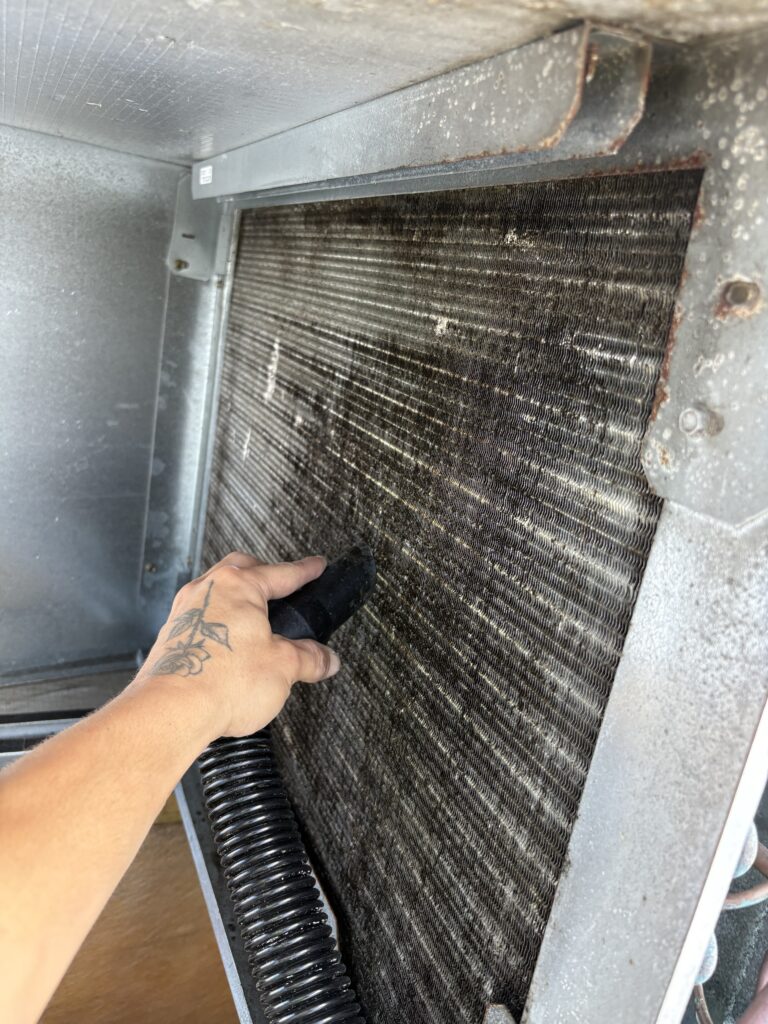
When a clog has already formed, a wet dry vacuum is your most reliable tool for clearing it. Attach the vacuum to the outdoor end of the drain pipe and seal the connection with a rag or duct tape. Running the vacuum for a minute or two pulls the clog and any standing water out of the line. You should hear the blockage release and see the trapped water and debris collect in the vacuum. After clearing the pipe, flush fresh water through the indoor access point to confirm that the drain is fully open. Check the drain pan as well and wipe out any slime or standing water you find there.
Some drainage problems run deeper than a simple clog and need a professional eye. A line that keeps blocking may have an improper slope, a partial collapse, or growth throughout its entire length. A technician can clear the full line, treat the pan, and install slow release tablets that stop algae from returning. They also check the safety float switch that shuts your system off when water backs up too far. If your AC has been shutting itself down on humid days, that switch is likely doing its job because of a full drain. Professional drain service protects your home from both the musty smell and the water damage a hidden overflow can cause. A clear drain line keeps moisture moving out of your home instead of festering inside it.
Cleaning Your Air Ducts to Eliminate the Musty AC Smell
Cleaning your air ducts addresses the musty smell that hides in the pathways carrying air through your home. Ductwork runs through attics, walls, and crawl spaces where dust, moisture, and mold can quietly collect over the years. When your system turns on, air travels through those ducts and picks up any odor living inside them. Even a spotless coil and drain will not fully fix the smell if the ducts themselves are contaminated. Leaky ducts that draw in humid attic air are especially prone to condensation and mold growth. Homes that have gone many years without duct service often carry a stale, musty odor that never seems to leave. Professional duct cleaning removes that buildup and refreshes the air moving through your entire house.
Duct cleaning is not a job most homeowners can do thoroughly on their own. Reaching deep into the duct runs requires specialized brushes, high powered vacuums, and sometimes camera inspection tools. A trained crew seals off the vents, agitates the debris loose, and captures it all with negative air pressure so nothing spreads back into your rooms. They can also identify and seal leaks that let humid, unfiltered air into the system. Sealing those gaps stops future condensation and keeps the ducts dry between cleanings. Many homeowners notice better airflow and lower dust levels in addition to the fresher smell after a professional cleaning.
Regular duct attention pays off in cleaner air, better efficiency, and fewer allergy triggers throughout your home. Sealed and clean ducts let your system deliver cool air where it belongs instead of losing it inside your walls. That efficiency lowers your energy bills and reduces the strain on your equipment during the long cooling season. Cleaner ducts also mean fewer dust particles, allergens, and mold spores circulating for your family to breathe. If you have never had your ducts serviced or you recently finished a renovation, cleaning is well worth scheduling. Want cleaner, fresher air throughout your home? Click here for our air ducts service. Fresh ducts complete the job of removing a musty smell for good.
Why You Need Professional AC Service for a Musty Smell
Some musty smell fixes are simple, but a lingering odor almost always signals a deeper issue that deserves a professional look. A trained technician can trace the smell to its true source instead of leaving you to guess. They carry the tools, cleaners, and experience needed to clean coils, clear drains, and inspect ducts safely. Professional service also catches related problems like refrigerant leaks, mold growth, and airflow issues before they turn into large repairs. Regular maintenance keeps the musty smell from ever returning and extends the life of your system. In Florida’s heat and humidity, a reliable air conditioner is not a luxury, and neglect leads to breakdowns at the worst possible time. The sections below explain when to call and why professional care is worth every dollar.
When to Call a Professional for a Musty AC Smell
You should call a professional when a musty smell sticks around after you replace the filter and flush the drain. A persistent odor usually means the mold sits somewhere you cannot reach, such as deep in the coil or the ductwork. You should also call right away if you see water pooling around the indoor unit or damp spots on your ceiling. Those signs point to a drainage failure that can quickly cause serious water damage to your home. A visible layer of mold on the coil or vents is another clear signal that professional cleaning is needed. Trying to handle heavy mold yourself can spread spores and expose you to health risks.
Certain symptoms make a service call urgent rather than optional. A burning or electrical smell is very different from a musty odor and calls for an immediate professional inspection. An AC that keeps shutting itself off on humid days is often reacting to a full drain pan and a tripped safety switch. Weak airflow paired with a musty smell frequently points to a frozen or heavily clogged coil that needs expert attention. Allergy flare ups or breathing trouble tied to your AC running are strong reasons to get the system inspected. A technician can confirm the cause and protect your family’s air quality.
Calling early almost always saves money compared to waiting until the problem grows. A small drain clog is inexpensive to clear, but the water damage from an overflow can cost thousands to repair. Mold that starts on a coil spreads into ducts and insulation the longer it goes untreated. A quick inspection gives you a clear answer and a plan instead of an ongoing mystery smell. Sol Aire offers free estimates with honest, no pressure recommendations so you know your options before any work begins. Reaching out at the first sign of trouble is the smartest way to protect your comfort and your budget.

The Benefits of Regular AC Maintenance Against Musty Smells
Regular AC maintenance is the single best way to keep a musty smell from ever taking hold. During a tune up, a technician cleans the coil, clears the drain, and checks the filter before problems have a chance to grow. That preventive attention stops mold and mildew at the source rather than after the odor spreads. Maintenance also keeps your system running at peak efficiency, which lowers your monthly energy bills. A well tuned air conditioner cools your home faster and runs less often during the brutal summer heat. Catching small issues early prevents the surprise breakdowns that always seem to strike on the hottest days.
Seasonal maintenance protects far more than just the smell of your home. A technician checks your refrigerant charge, electrical connections, and moving parts during every visit. Those inspections catch worn components before they fail and leave you without cool air. Clean coils and clear drains also reduce the strain on your system, which extends its overall lifespan by years. Fewer emergency repairs mean lower costs and less stress over the life of your equipment. Most manufacturers even require regular maintenance to keep your warranty valid.
A maintenance plan takes the worry out of remembering when service is due. Scheduled visits keep your system clean and your air fresh through every season of the year. You gain the peace of mind that comes from knowing a trained technician has inspected your equipment recently. Consistent care builds a service history that makes future troubleshooting faster and more accurate. Homeowners who maintain their systems rarely deal with the musty smells that plague neglected units. Investing in maintenance now saves you from expensive repairs and uncomfortable summers later.
Why Choose Sol Aire Air Conditioning for Your Musty AC Smell
Sol Aire Air Conditioning brings over fifty years of combined industry experience to every home we serve across Central Florida. Our team knows exactly how the local heat and humidity affect your system, and we treat the real cause of a musty smell rather than covering it up. As a Daikin Pro, Mitsubishi Diamond, and Navien certified dealer, we hold the training and standards that top manufacturers demand. We are a licensed and insured HVAC contractor in Florida, so your home and your equipment stay protected during every visit. Our background checked technicians arrive on time and treat your home with the respect it deserves.
We built our reputation on old fashioned customer service and clear communication from the first call to the final walkthrough. Every visit includes a free estimate with honest, no pressure recommendations, so you always understand your options before any work starts. When a repair is needed, financing options are available to keep your next HVAC service within reach. We serve Sanford, Oviedo, Lake Mary, Longwood, DeLand, and communities throughout the region with the same reliable care. Our goal is simple, and that is fresh, cool, comfortable air in your home all year long.
When a musty smell has you dreading the moment your AC turns on, our team is ready to help. We will find the source, fix it right, and give you clear steps to keep the odor from coming back. You can reach Sol Aire Air Conditioning at (407) 789-4000 or email us at service@solaireac.com to schedule your visit. A quick call is all it takes to trade that damp, musty odor for clean and refreshing air. Trust the local experts who care about your comfort as much as you do.